

OTO PROJECT
The OTO project aims to implement a first of a kind large-scale production of decarbonised plasterboard through an innovative electrified manufacturing process.
The project targets both reduction in energy consumption and partial electrification of the calcination process, leading to a 30% global energy reduction, and 50% lower water consumption. Based on 15 years of Saint-Gobain research including operation of a successful pilot plant, this self-standing, scalable technology can contribute to the transformation of the plasterboard industry. The project is estimated to avoid approximately 24 kilotonnes of CO2 annually, equivalent to 51% relative greenhouse gas (GHG) emissions avoidance over the first ten years of operation compared to the reference scenario, contributing significantly to deep decarbonisation in an emission-intensive sector. The project will implement a disruptive process, which alters the conventional structure of stucco, the intermediate product used in plasterboard manufacturing, while maintaining the quality of the final product (plasterboard). The project also combines electrification and reduces natural gas consumption at the drying zone in the same proportion than water savings. At system level, 115 gigawatt hours per year (GWh/year) of natural gas are saved, contributing to the decarbonisation of the plasterboard industry. Furthermore, the project integrates circularity by reusing process water and incorporating up to 30% recycled gypsum.
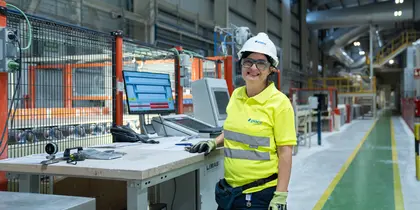
OTO aligns with the European Green Deal by fostering deep decarbonisation in energy-intensive industries. It supports the implementation of the Net-Zero Industry Act (NZIA) by boosting domestic production capacity for essential construction materials while meeting stringent decarbonisation standards. By combining electrification, efficiency, and circularity, OTO accelerates the shift toward climate-neutral construction materials while strengthening the EU’s industrial leadership, strategic autonomy, and innovation capacity in sustainable manufacturing.
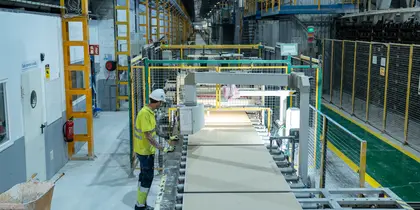
Implemented at the Saint-Gobain Placo plant in Quinto (Aragón, Spain), OTO reinforces the regional industrial ecosystem, creating and sustaining high-skilled green jobs in engineering, operation, and maintenance. It promotes upskilling and reskilling for the local workforce and stimulates regional supply chains in renewable energy, equipment, and raw materials, contributing to Aragón’s position as an industrial decarbonisation hub. With scalability potential across 26 European Saint-Gobain sites, OTO demonstrates replicability, cost efficiency, and technological maturity, providing a model for industrial transformation and economic resilience in Europe’s construction materials sector.
Coordinator’s contact details Joaquin Caso (Spain) | List of participants (beneficiaries) 
|

Funded by the European Union. Views and opinions expressed are however those of the author(s) only and do not necessarily reflect those of the European Union or the European Climate, Infrastructure and Environment Executive Agency (CINEA). Neither the European Union nor the granting authority can be held responsible for them.